
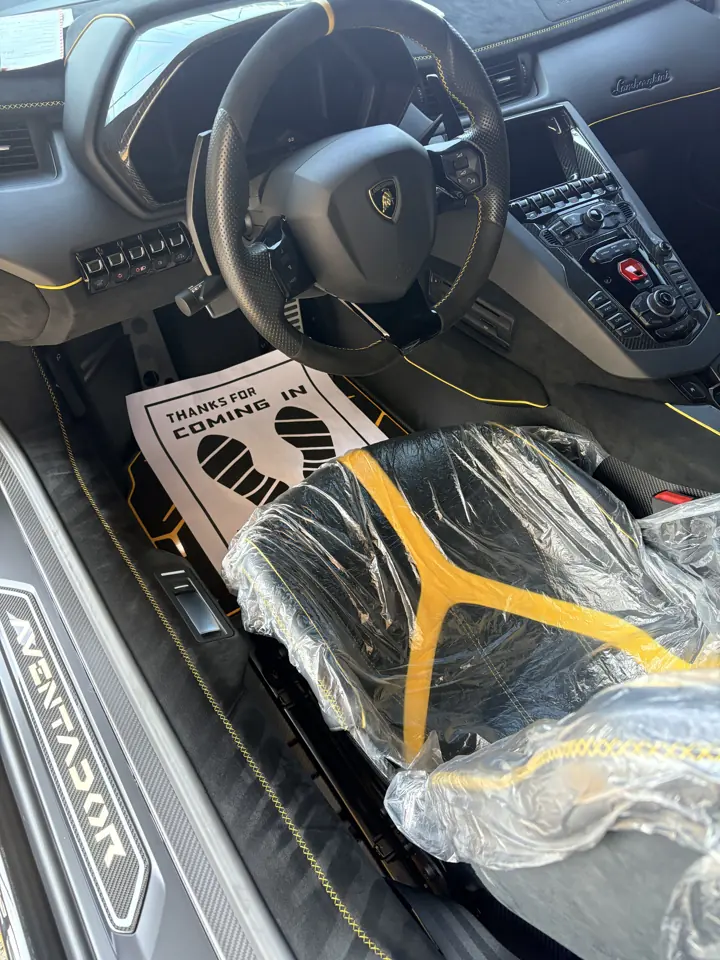
Cabin protected during cleaning
Why sand is hard to remove
Sand grains are fine, heavy and sharp-edged. They sink to the base of the carpet fibres and get stuck in the seat rails, the stitching and the boot seals. A standard vacuum removes what is on the surface, but often leaves most of it, lodged deep down.
Over time those grains rub with every step in and out: they wear the carpet, scratch the plastic sills and end up on the seats.
Before you get back in the car
- Knock off shoes and sandals, and rinse your feet at the beach showers when there are some.
- Shake towels, umbrella and bags before packing them, ideally in a closed bag.
- Lay a boot liner or an old cover down for the beach gear.
- Keep a small brush in the door pocket for passengers’ feet.
Back home: the right moves
Take out the floor mats and shake them hard, then beat them upside down. Then vacuum the carpet with several passes in several directions, brushing lightly to bring the grains up.
Do not wait for weeks: the longer sand stays, the deeper it goes.
What a professional clean does
For a cabin full of sand you need to go further: deep vacuuming with suitable nozzles, brushing the fibres, then steam on the carpet and into the corners to lift what remains. Seat rails, sills and the boot are done one by one.
Embedded sand is removed as an option on the package of your choice, with the price given before the job. See the interior cleaning page.
And outside?
By the sea, bodywork and glass also catch the salt air. A film of salt and sand must never be rubbed off dry: it is the surest way to scratch the paint. Steam dissolves it before wiping.
We work in Antibes and Juan-les-Pins and Vallauris and Golfe-Juan, where this question comes up often.
The boot, the first victim
Umbrella, cool box, towels, board: all the beach gear goes through the boot. Sand settles in the carpet, under the floor and around the spare wheel, where nobody looks.
A washable boot tray or liner changes everything: take it out, shake it, and the original carpet stays clean.
Fabric seats, leather seats
On a fabric seat, sand lodges in the weave and comes out every time you sit down. It needs brushing then vacuuming, especially where the base meets the backrest.
On a leather seat, sand does not get in, but it scratches the surface when you sit on it. Remove it gently before cleaning and feeding the leather: see our article on leather care.
Sun cream and salt: sand’s companions
After the beach, sand rarely arrives alone. Sun cream leaves greasy marks on the steering wheel, armrests and seats; salt from wet swimwear marks fabric as it dries.
These marks are cleaned with products suited to each material, ideally before they set in.
End of season: the big clean
After a summer of beach days, a complete clean resets the cabin: sand, salt, sun cream on the seats and steering wheel. The Sublime package adds leather restoration and water-repellent glass treatment.
Packages start at €200 incl. VAT for a saloon: see our prices.
Need a hand?
Nicolas takes care of it, at your place
Describe your car and what you need: slot and price confirmed within 24 hours, before the job.
Questions
In short
Is a vacuum cleaner enough for sand?
For surface sand, yes. Embedded sand needs brushing, repeated vacuuming and often steam.
Is sand removal included in the packages?
Vacuuming is. Embedded sand is removed as an option, priced before the job.
Does salt damage the bodywork?
It leaves a film that must not be rubbed off dry. A gentle clean removes it without scratching the paint.